
"I decided to play to my strengths" – Sajida on the importance of straight-talking
Monday 31 January 2022
Maggie's West London
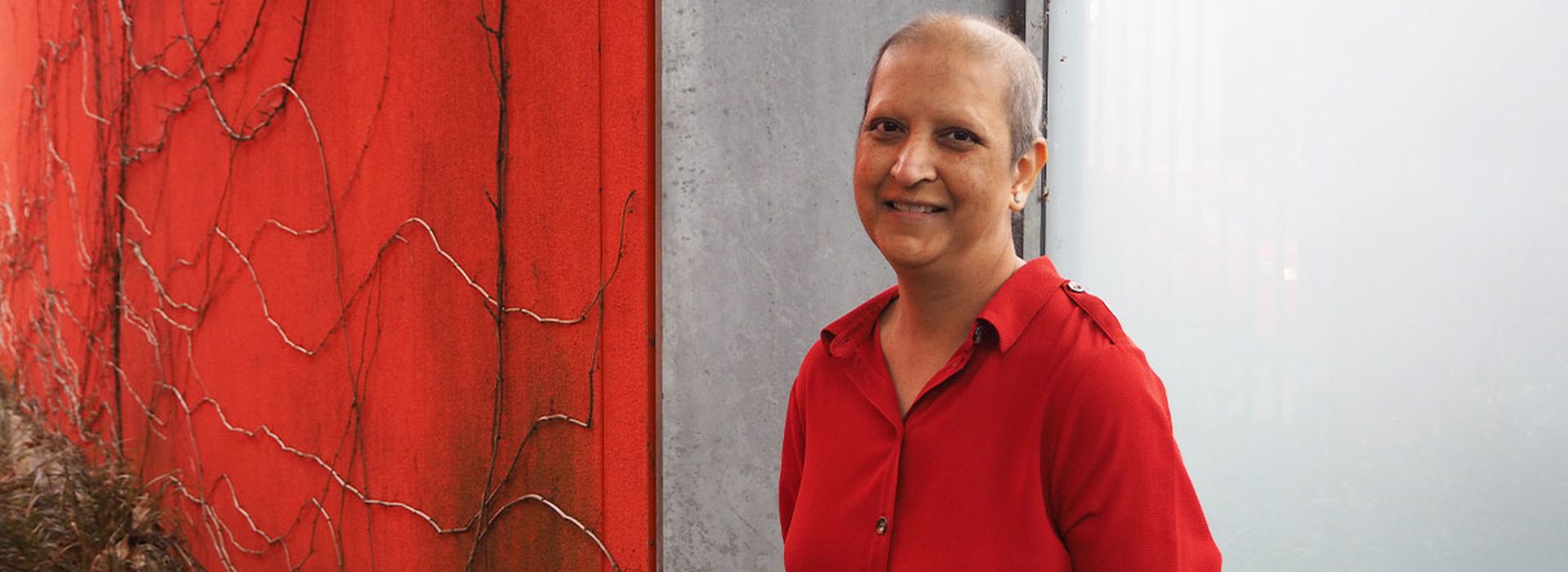
I approached all my hospital appointments as I would any work meetings: dressed professionally and ready to head to work after the appointments.
Tell me as it is, no sugar coating
That’s always been my approach to cancer.
I’ve tried to treat it like a project at work. I realised the moment I started thinking something’s happening to ‘me’, or thinking of myself as a victim, it would become difficult.
If instead I could approach it by saying, “I’m not the only person who this has happened to, I have lots of support, and I need to pay attention to myself, focus on myself, and approach it with balance” – then I knew I could manage it better.
I began to feel really calm, and that calmness focused on not giving in and not just accepting it, but simply being realistic with it.
I decided to play to my strengths, and I went from there.
I realised I couldn’t do anything about the cancer - it’s here, it’s in me, I couldn’t deny this - but I could choose how I react to it.
It stung, but I knew it would help me to continue to treat it like any work “project”.
Cancer in the workplace
I worked in the Civil Service for 33 years. I was a very career-driven person, and worked all hours to meet not just my deadlines, but that of the team.
I took pride in my work. I’d often bring my laptop to Maggie’s, to work in a calm, beautiful environment where I felt supported.
However, during my second diagnosis with cancer, I experienced great difficulty and lack of any support from my employer, and particularly my direct line manager. She and my colleagues could see the pain I was in, but she refused to ease the work pressure, or give allowance for the time off I needed.
When I was going in for tests, I was put under a performance review. My GP provided a recommendation to allow me to work from home, but this was rejected.
I reminded my manager that by not following the GP’s recommendation, she might be putting myself and the department at risk, and she just shrugged her shoulders. When the HR team supported her decision, I asked to speak with them directly, but I was refused.
I then decided to resign, but before leaving the office I asked to speak to the director of the department.
The director asked to me take the rest of the week off, and that she would look into. However, within a few days, the director emailed me to say that I would continue to work under the current line manager and continue with the performance review.
A few days later, I received the secondary diagnosis. This is when my line manager, the HR team and the director’s tone suddenly changed to redemption, although I received no apologies. It is such an onerous task to challenge an employer – especially, an institution - while undergoing life-threatening treatment.
Retirement
3 years in, I decided to take medical retirement. Taking retirement was not an easy decision, partly as psychologically I didn’t want to “give in” to the illness; I wanted to continue a normal life, and was fearful of empty days.
However, it’s been a good decision.
Retirement has allowed me to relax and spend time doing what I enjoy.
In many ways, it’s been the best decision I’ve taken, one I reached thanks to the advice and support of the staff at the Maggie’s.
Whilst my experience has been challenging, I’m determined to help others, and empower patients and employers to handle these situations better for all involved.
We're here for you
If you or someone you love has cancer, we are here with you.
Come and see us at your nearest Maggie’s, call us on 0300 123 180 or email us at enquiries@maggies.org.
Last review: Jun 2023 | Next review: Jan 2024